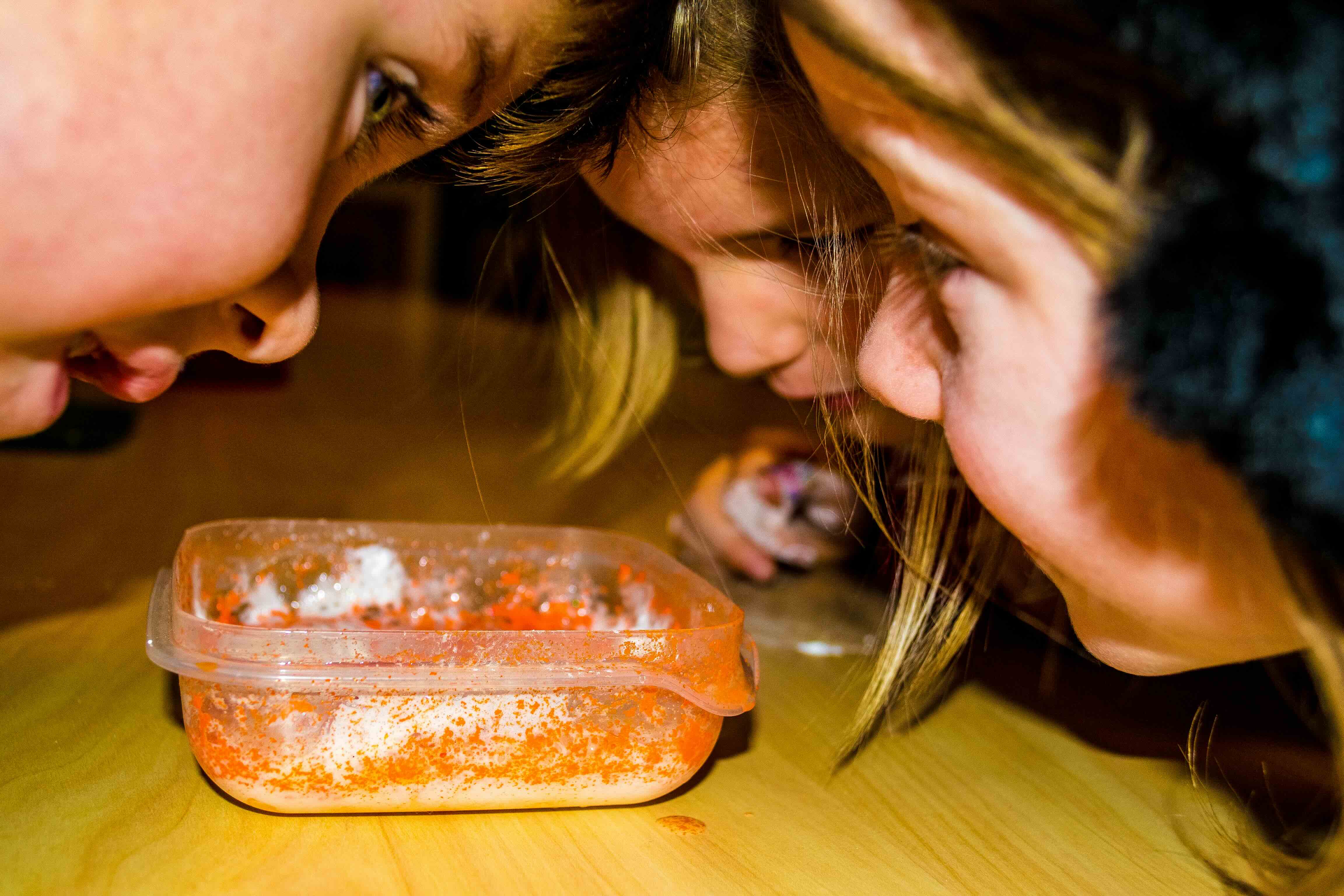
If you’ve ever watched a child light up while building a marble run, testing a simple circuit, or figuring out why their paper airplane won’t fly straight, you’ve seen kinesthetic learning in action. It’s learning by doing—using hands, movement, and real materials to understand ideas.
At STEAMLabs Kids, we’re big believers in this approach for elementary STEM. Not because every child has one fixed “learning style,” but because active, hands-on experiences help nearly all kids build real understanding, confidence, and lasting interest in science, technology, engineering, and math.
What Kinesthetic Learning Looks Like in Practice
For K–6 kids, kinesthetic STEM means:
- Building and testing rather than just watching a demo
- Measuring, adjusting, and trying again
- Using simple tools and materials they can touch and manipulate
- Moving ideas from abstract concepts (force, energy, circuits, design) into something they can see and hold
It pairs especially well with the way young brains learn. When kids physically interact with an idea, they form stronger connections. A ramp and cars teach slope and friction better than a worksheet. A breadboard and LEDs make electricity feel real. A 3D design that gets printed and held in their hands turns an idea into something concrete.
What the Research Shows
Large reviews of STEM education consistently find that active, hands-on approaches outperform pure lecture or worksheet methods. One well-known analysis of 225 studies found that students in active learning settings scored higher on exams and were significantly less likely to fail than those in traditional lecture courses. Other reviews of practical science work and embodied/kinesthetic approaches show benefits for understanding, motivation, and retention—especially important in the elementary years when curiosity is high and foundational concepts are forming.
The key isn’t labeling kids as “kinesthetic learners.” The key is giving every child regular opportunities to learn by making, testing, and iterating.
How This Shows Up at the Lab
In our labs and camps, this looks like:
- Designing and printing real objects in Tinkercad instead of only talking about 3D design
- Building circuits and exploring electricity & magnetism with actual components
- Testing forces, motion, and simple machines with ramps, launches, and marble runs
- Capstone builds where kids show what they figured out
Kids leave with something they made and a clearer sense of how things work—and usually more questions than they arrived with.
Beyond the Activity
Hands-on STEM builds more than subject knowledge. It develops patience when something doesn’t work the first time, collaboration when kids problem-solve together, and the quiet confidence that comes from figuring something out with your own hands. For many children, that experience is what turns “science is hard” into “I want to try that again.”
We built STEAMLabs Kids because we wanted more of this for our own kids and for the families in El Dorado Hills. “What the hand does, the mind remembers.” If that approach sounds like what your child needs, come see it in action.